Aviation insights
-
 US AirforcesMarch 24, 2025 at 8:30 AM
The A-10 Thunderbolt II, B-1 Lancer, and B-2 Spirit each serve distinct yet complementary roles in the U.S. Air Force's airpower strategy. The A-10, a rugged, low-flying attack aircraft, provides close air support (CAS) for ground troops, using its 30mm GAU-8 Avenger cannon to destroy enemy armor. The B-1 Lancer, a supersonic heavy bomber, delivers high-speed, long-range conventional strikes, often used for rapid-response missions. The B-2 Spirit, with its stealth technology, is designed for deep penetration strikes, carrying both nuclear and conventional weapons while evading enemy radar. Together, these aircraft create a balanced force, with the A-10 dominating tactical ground engagements, the B-1 executing high-speed precision bombing, and the B-2 ensuring stealthy, strategic strikes against well-defended targets.
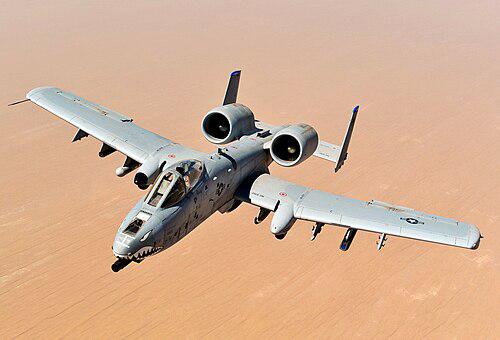
The Fairchild Republic A-10 Thunderbolt II, commonly known as the "Warthog," is a U.S. Air Force close air support (CAS) aircraft designed for attacking armored vehicles and ground forces. Developed in the 1970s, it features a 30 mm GAU-8 Avenger rotary cannon, heavy titanium armor, and the ability to operate from short or unpaved runways.
Introduced in 1977, the A-10 has been used in major conflicts, including the Gulf War, Afghanistan, and Iraq. Despite plans to replace it with the F-35, the A-10 remains in service due to its unique battlefield effectiveness. Upgrades, such as the A-10C variant, have modernized its avionics for precision weaponry. The USAF began retiring A-10s in 2023, but further retirements are paused until a suitable CAS replacement is confirmed.
The A-10 was developed in response to the Vietnam War’s lack of effective attack aircraft. Earlier jet fighters, like the F-4 Phantom II, were expensive and lacked low-speed CAS capabilities. The A-10 was designed as a low-cost, heavily armed alternative capable of enduring damage and providing sustained support for ground troops.
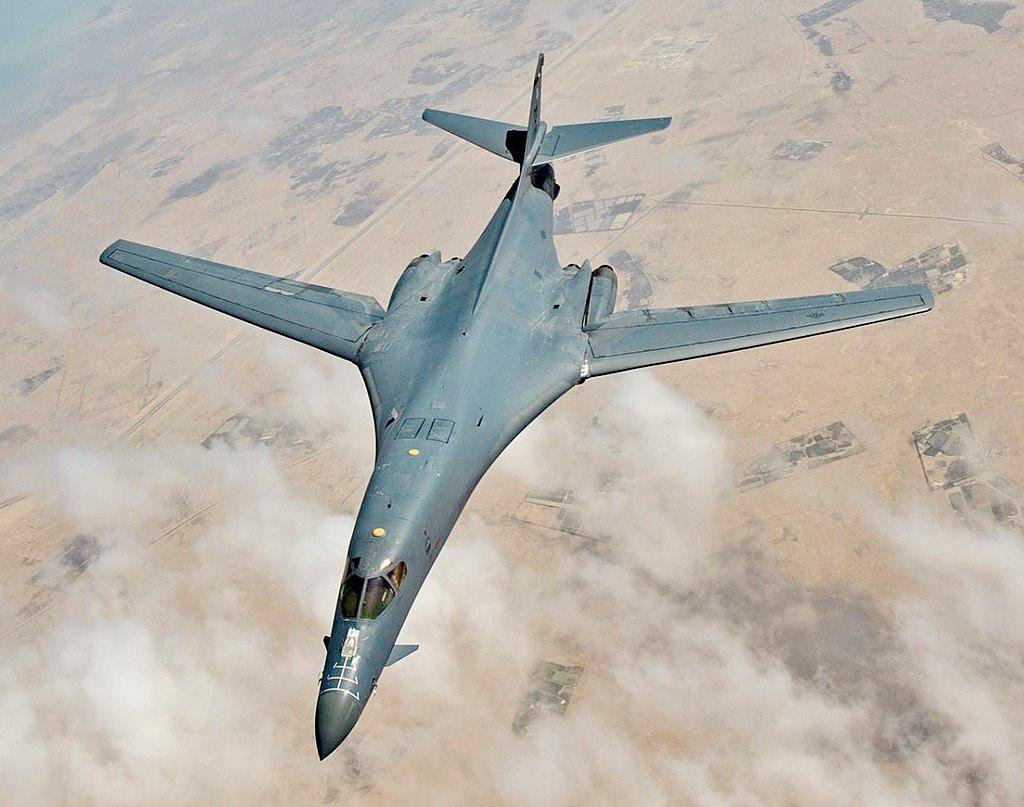
The Rockwell B-1 Lancer, nicknamed the "Bone" (from "B-One"), is a supersonic strategic heavy bomber used by the U.S. Air Force, with the largest payload of any U.S. bomber at 75,000 pounds. Originally manufactured by North American Rockwell/Rockwell International and now maintained by Boeing, 104 B-1s were built between 1973–1974 and 1983–1988. The aircraft first flew on December 23, 1974, and officially entered service on October 1, 1986. Initially designed in the 1960s to combine the speed of the B-58 Hustler with the range and payload of the B-52, the B-1A prototype could reach Mach 2.2 but was canceled in 1977 due to cost concerns and the introduction of cruise missiles. The program was revived in 1981 as the B-1B, with a lower high-altitude speed of Mach 1.25, but improved low-altitude performance, avionics, and weapons capacity. Entering service as a nuclear bomber under Strategic Air Command (SAC), the B-1B transitioned to conventional bombing after 1992 and saw combat in Operation Desert Fox (1998), Kosovo (1999), and conflicts in Afghanistan and Iraq. As of 2025, 45 B-1Bs remain in service, with plans to retire them by 2036 as they are gradually replaced by the B-21 Raider.
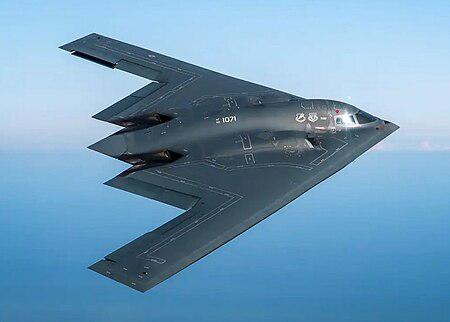
The Northrop B-2 Spirit, also known as the Stealth Bomber, is an American heavy strategic bomber designed with low-observable stealth technology to penetrate advanced anti-aircraft defenses. Developed under the Advanced Technology Bomber (ATB) project, it led to the cancellation of the Mach 2-capable B-1A in favor of its stealth capabilities. The subsonic flying wing, built by Northrop (now Northrop Grumman) with Boeing, Hughes, and Vought as key subcontractors, was produced from 1987 to 2000. The B-2 can carry both conventional and nuclear weapons, including up to eighty 500-pound Mk 82 JDAM bombs or sixteen 2,400-pound B83 nuclear bombs, making it the only stealth aircraft capable of carrying large air-to-surface standoff weapons.
Originally planned for 132 bombers, only 21 were built due to high costs and the end of the Cold War. Each aircraft cost approximately $737 million to build, with total procurement costs averaging $929 million per plane (~$1.11 billion in 2023). The B-2 operates at altitudes up to 50,000 feet, has an unrefueled range of over 6,000 nautical miles, and can fly over 10,000 nautical miles with midair refueling. Entering service in 1997, it was first used in combat in Kosovo (1999) and later in Iraq, Afghanistan, Libya, and Yemen.
As of 2024, 19 B-2s remain in service, after one was destroyed in a 2008 crash and another was retired in 2022 due to costly repairs. The U.S. Air Force plans to retire the B-2 by 2032, replacing it with the Northrop Grumman B-21 Raider.